The right hosting model for an ecommerce site is the one that supports its application, transaction workload and operating responsibilities. Shared hosting, a VPS, dedicated hardware and cloud services can each be suitable in different circumstances. The label alone does not establish checkout speed, security or capacity.
Start with what makes a store different from a publishing site: customers maintain sessions, change carts, place orders and interact with payment and fulfilment systems. This guide maps those needs to hosting characteristics. It does not rank providers or prescribe a server size from a visitor count.
Identify the store application and its dependencies
Confirm the commerce platform, installed extensions, database, background jobs and external services that the store actually uses. Check the requirements for those versions. For example, WooCommerce's server recommendations identify its runtime, database, HTTPS and extension requirements. They are compatibility guidance, not a guarantee that a minimum installation will handle a particular store's demand.
Keep catalogue browsing, search, logged-in activity, cart changes, checkout and administration distinct when describing the workload. A promotion that attracts many cached product-page views is different from one that produces many simultaneous checkout actions. Neither pattern can be sized reliably from the phrase “high traffic”.
Include dependencies outside the web server: payment gateways, shipping or tax integrations, inventory systems and transactional email, where used. A hosting change cannot establish the availability or correctness of every external service.
Separate cacheable delivery from transaction work
A CDN can serve cached assets such as product images and reduce some requests to the origin. Its effect depends on what is eligible for caching and whether requests hit the cache. Cloudflare's default cache behavior, for example, distinguishes cacheable content and origin cache directives. Do not treat the presence of a CDN as proof that all store requests are served away from the application.
Customer-specific responses need deliberate handling. WooCommerce's caching guidance excludes Cart, Checkout and My Account pages from page caching because their content is specific to the customer. Other platforms and cache layers have their own rules. Verify the actual integration rather than applying a cache-everything rule to a store.
Serving an image from an edge cache does not execute a payment operation or remove database work from an uncached checkout. In WooCommerce's Cart and Checkout blocks, the server is authoritative for transactional and persistent data. Hosting evaluation should therefore include the dynamic path, not only a fast cached landing page.
Map store requirements to the resource model
Use the model to identify available control and constraints, then examine the actual service. The hosting-model explanation covers the underlying resource boundaries in more detail.
- Shared hosting: can fit a store whose runtime, extensions, background tasks and resource use fit the provider-managed environment. Check account limits and supported configuration; ecommerce does not automatically require leaving shared hosting.
- VPS: may provide the virtual environment and configuration control a particular store needs. Check allocation policies, administrator access and who operates it. A VPS is not automatically faster or more secure, and its resources are not necessarily physically exclusive.
- Dedicated server: provides a physical-machine boundary when that is relevant to the workload or configuration. It does not by itself distribute database work, provide dedicated Internet bandwidth or include application management.
- Cloud service: assess the actual architecture and scaling operations. Adding instances is useful only when the application and its state can use them correctly. “Cloud” does not establish automatic failover, unlimited growth or uninterrupted resizing.
More infrastructure control can also mean more operational work. There is no universal upgrade ladder or fixed number of daily visitors that selects the model for every store. Compare a documented limitation with a proposed capability, rather than treating a category name as the solution.
Measure peak transaction demand
Promotions, campaigns, launches and seasonal events can change the mix of browsing and transactions. Record what the event is expected to change: product views, searches, cart actions, orders or background processing. Where observations exist, keep their context, including the application version and cache state.
If capacity is uncertain, say so. An authorized representative test can provide evidence, but this article supplies no benchmark, concurrency target or universal CPU, RAM or headroom recommendation. A technically responsible assessment must connect the observed bottleneck to a change and verify the result. More memory, a faster storage label or another instance cannot be assumed to fix every application or integration delay.
Assign maintenance and recovery around live orders
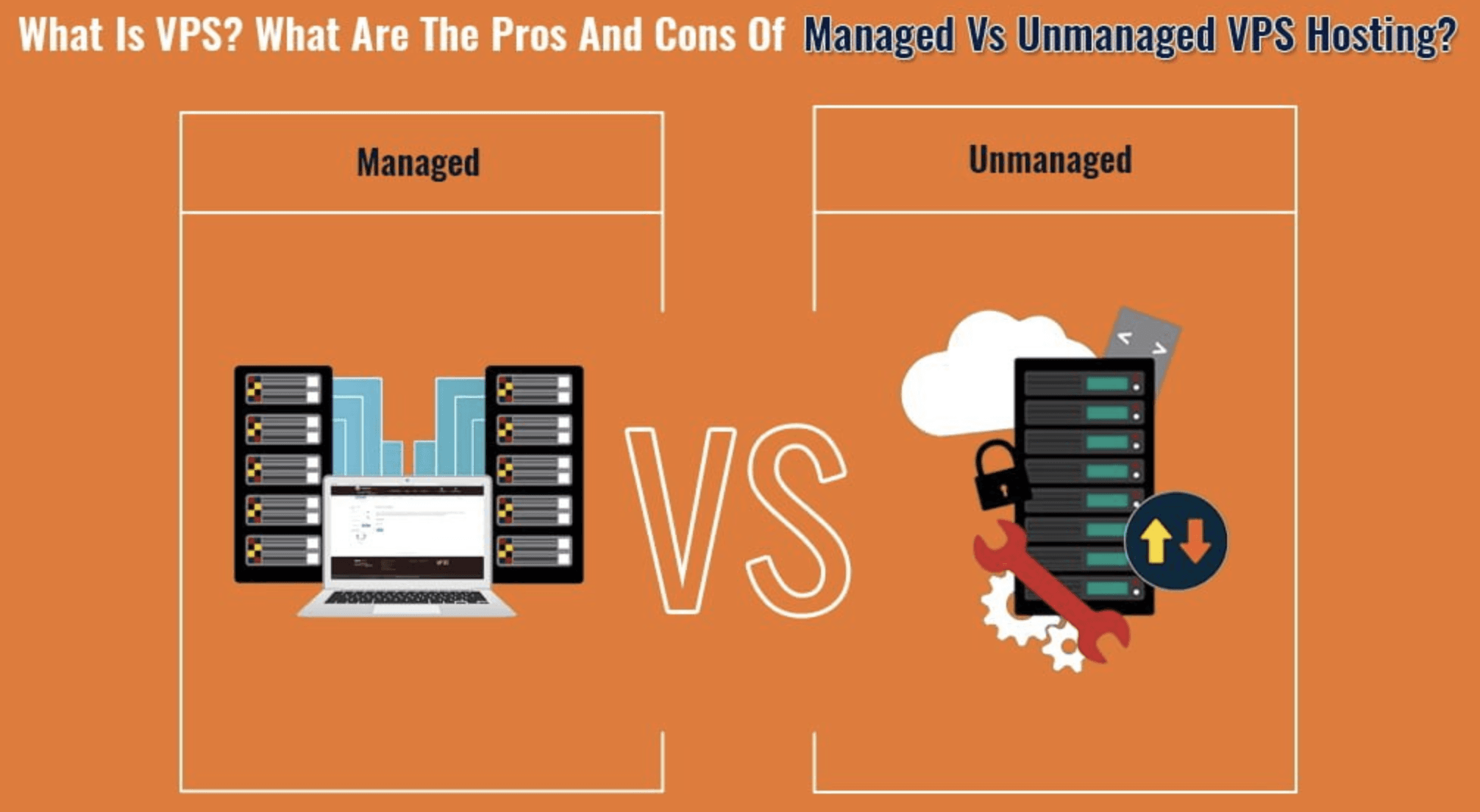
For each relevant layer, establish who handles operating-system or platform updates, commerce application and extension maintenance, monitoring, incident response, backups, restore testing and scaling actions. Specify who validates browsing, order placement and integrations after a change. “Managed” does not mean every one of these tasks is included; the managed versus unmanaged guide explains that operating boundary.
Recovery must account for transactions since the recovery point. WooCommerce's Subscriptions restore guidance documents risks including missing orders and replayed renewal actions after restoration. That is a platform-specific example of why a store needs more than a successful backup job. Agree how the application operator will reconcile order and payment state before resuming normal operation.
Choose backup and recovery requirements from the store's tolerable loss and interruption, rather than assuming a daily copy prevents all data loss. This is a requirements question, not a live database-restore procedure or a promise that a particular hosting plan includes recovery work.
Keep hosting security and payment responsibilities distinct
Hosting controls, application updates, account access and payment-provider arrangements address different parts of a store's operation. None independently proves complete transaction security, fraud prevention or freedom from breaches.
The PCI Security Standards Council explains that outsourcing payment processing does not remove the merchant's responsibilities. Confirm the applicable validation requirements with the organization managing the store's compliance program, such as its acquirer or payment brand. A hosting label or TLS certificate is not a PCI compliance determination.
Turn the store-specific constraints into a selection brief
You should now be able to describe the platform and integrations, the cached and dynamic paths, the expected demand changes, the operating owners and the recovery constraints that matter for this store. Use those facts to assess which resource model exposes the capabilities you need.
The broader hosting-plan selection workflow takes that brief through plan requirements, location, recurring cost and acceptance evidence. Current offers and written service scope define actual resources and included work.
WebCare360 publishes this informational guide as a hosting provider. No independent performance testing, conversion improvement or universal best-provider result is claimed.