A cron job is a command scheduled to start at specified times on a Unix-like system. It is useful for recurring work such as application housekeeping, but a schedule is not a queue, a backup policy or a guarantee that the command succeeds.
Read the five time fields
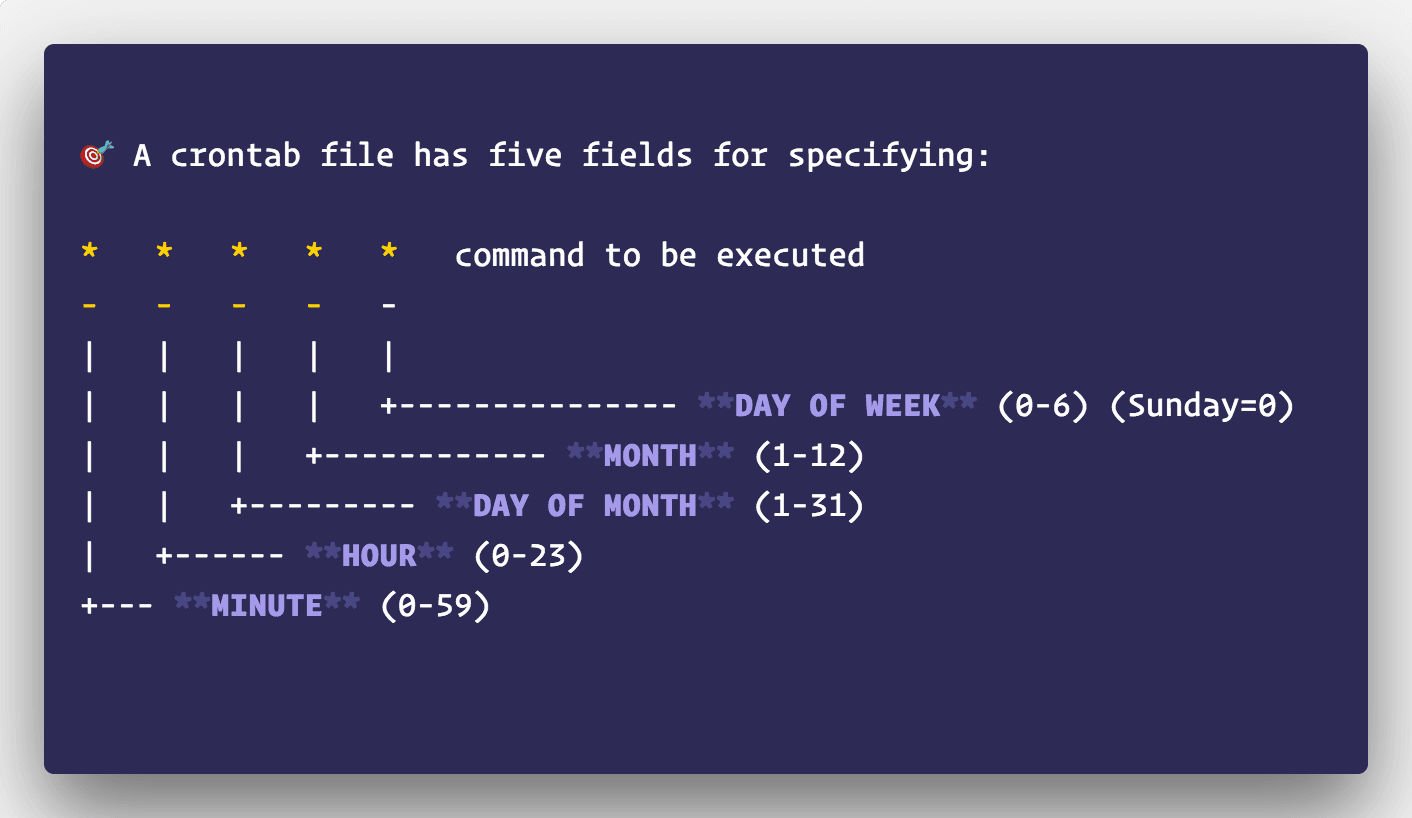
A user crontab normally puts minute, hour, day of month, month and weekday before the command. In 30 2 * * *, the scheduled start is 02:30 each day in the applicable scheduling timezone. The asterisks leave those fields unrestricted.
The crontab manual explains ranges, lists and implementation-specific extensions. System crontabs can also contain a username field; do not copy one into a user crontab unchanged. Daylight-saving transitions can skip or repeat local clock times.
Decide whether time-based execution fits
Consider an hourly import that normally takes ten minutes. What should happen if one run takes longer than an hour: should the next wait, exit or process another batch? Cron does not answer that application-design question. Choose a locking or queue mechanism appropriate to the workload before increasing frequency.
A scheduled process runs in its account's environment, which may differ from an interactive login. Specify the runtime, paths and required configuration deliberately. Give the account only the permissions the task needs.
Define success separately
Record a completion signal, failures and the expected output of the application. Mail can carry command output when configured, but is not a universal completion receipt. Someone must notice a missing or failed run and know what to do next.
For the actual hosting-panel workflow, use the cPanel cron setup and verification guide. Keep the conceptual schedule and the application's recovery plan separate: retrying a task that already made partial changes can require application-specific handling.
Before scheduling a task, decide how you will recognize success, find its output and handle a missed or overlapping run. Available scheduling tools depend on the hosting service.