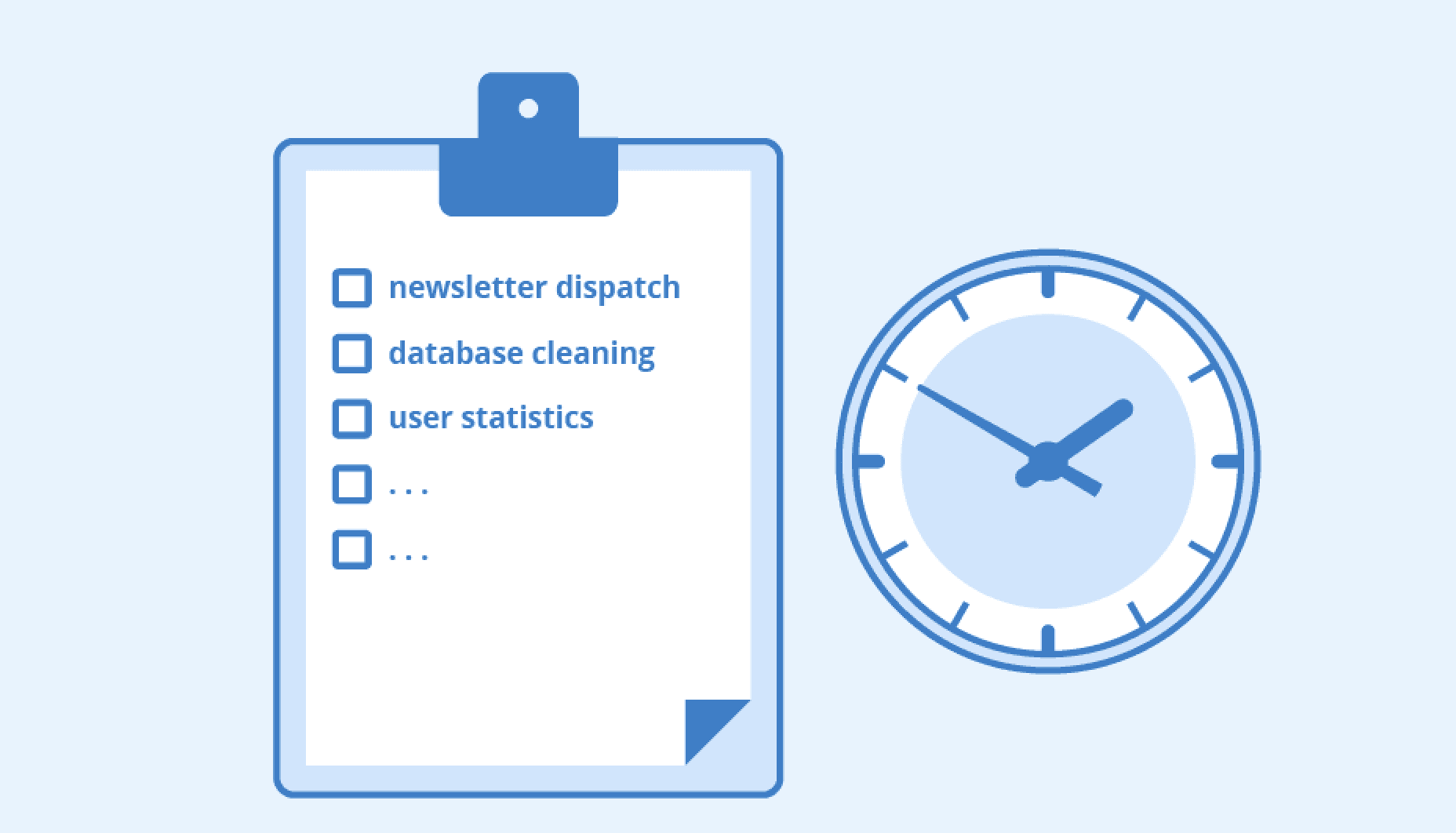
Use cPanel's Cron Jobs interface to schedule an application command only after confirming that the command works under your hosting account. Saving a schedule does not prove that the task completed successfully.
Prepare the task
Ask the application maintainer for its supported scheduled command and required runtime. Record the account, absolute executable and script paths, expected duration and intended result. Confirm the server's scheduling timezone and your hosting plan's permitted frequency. Avoid placing credentials in a command that could appear in logs or support messages.
Add the schedule in cPanel
- Sign in to the intended account and open Cron Jobs. The provider can disable this interface; contact support if it is unavailable.
- Choose a preset or fill in Minute, Hour, Day, Month and Weekday. For example,
0 * * * *schedules an hourly start at minute zero. Confirm that this frequency suits the application. - Enter the verified command with absolute paths. Do not copy a path containing another account's username.
- Add the job, then review the saved entry for the intended schedule and command. Check for an existing equivalent job before leaving both enabled.
The cPanel Cron Jobs documentation describes the interface and warns about overlapping runs. Give a job sufficient time to finish; use the application's supported locking mechanism where simultaneous execution would be unsafe.
Verify one run before relying on it
Check the application's log and expected outcome after the scheduled time. Keep initial diagnostic output available. Cron mail depends on output and mail configuration, so the absence of an email is not proof of success or failure.
If the task does not run, compare the schedule's timezone, account permissions, interpreter path and application configuration with the known working command. Ask support for the scheduler's execution evidence if needed. Remove a temporary test schedule after verification, and record who owns ongoing monitoring.
Keep the schedule, command path, runtime and expected result together. Confirm who investigates missed or failed runs under your hosting agreement.