Time4VPS is a Lithuania-based VPS hosting provider known for its affordable virtual private servers, storage VPS solutions, and dedicated hosting options across European data centers. Operated by Interneto Vizija, it has built a strong reputation among developers, startups, and budget-focused users who need reliable VPS hosting without high infrastructure costs.
The platform is especially popular for its low entry pricing, simple VPS management, and decent performance for small to medium workloads such as websites, VPN setups, game servers, and development environments. For many users, Time4VPS serves as an easy starting point into self-managed hosting.
However, as hosting needs evolve, many users begin exploring alternatives. Common reasons include the need for more global server locations outside Europe, higher-performance cloud infrastructure, improved scalability, better automation tools, and more advanced developer ecosystems. Some users also look for stronger uptime guarantees, faster support response times, NVMe-based high-performance servers, or managed VPS options that reduce technical workload.
In 2026, the VPS hosting market has become highly competitive, with providers offering faster provisioning, global edge networks, and flexible pricing models that often outperform traditional budget VPS platforms. Because of this, users frequently compare Time4VPS with newer cloud-first providers, offshore hosting companies, and high-performance VPS platforms.
This guide presents the 10 best Time4VPS alternatives in 2026, carefully selected based on performance, pricing, reliability, infrastructure quality, user reviews, and real-world hosting use cases helping you choose the right VPS provider based on your specific requirements.
How We Selected the Best Time4VPS Alternatives
To ensure this list of Time4VPS alternatives is practical, up-to-date, and genuinely useful in 2026, we used a structured evaluation process based on real-world hosting requirements rather than marketing claims. Each provider included in this guide was assessed against multiple technical, commercial, and reliability-focused criteria to ensure fair comparison.
First, we evaluated server performance and infrastructure quality, including CPU type, NVMe SSD availability, virtualization technology (KVM, cloud instances), network stability, and overall uptime consistency. Providers offering modern hardware and stable global networks were prioritized over outdated or oversold infrastructure.
Second, we analyzed server locations and geographic coverage, ensuring a balanced mix of European, North American, Asian, and offshore-friendly hosting environments. Since Time4VPS is primarily Europe-focused, alternatives with broader global reach were ranked higher.
Third, we reviewed pricing transparency and value for money, focusing on entry-level VPS affordability as well as scalability into higher-tier plans. Hidden fees, unclear resource allocation, and inconsistent pricing models were considered negative factors.
Fourth, we assessed privacy policies and jurisdictional advantages, especially for users seeking offshore hosting, DMCA tolerance, or enhanced data privacy. Providers offering flexible legal environments or privacy-friendly infrastructure were included where relevant.
Fifth, we examined scalability and developer features, such as APIs, automation tools, one-click deployments, snapshots, backups, and support for modern DevOps workflows. Platforms offering cloud-native experiences ranked higher than basic VPS panels.
Sixth, we factored in customer support quality and user reputation, using verified feedback from platforms like Trustpilot, G2, and Reddit discussions. Consistency in support response time and technical expertise played a key role in ranking.
Finally, we ensured that each provider is actively operating in 2026, has publicly available and verifiable pricing, and offers real-world tested hosting services suitable for production use.
Quick Comparison of the Best Time4VPS Alternatives
Below is a quick side-by-side comparison of the top 10 Time4VPS alternatives in 2026. This table is designed to help you instantly evaluate pricing, server coverage, uptime reliability, and best use cases before diving into detailed reviews.
| Provider | Starting Price | Server Locations | Uptime SLA | DMCA Policy | Best For | Rating |
| Hetzner Cloud | ~$4–5/month | Germany, Finland, USA | 99.9% | Strict compliance | High-performance EU VPS | 4.7/5 |
| DigitalOcean | ~$4/month | Global (USA, EU, Asia) | 99.99% | Standard compliance | Developers & SaaS apps | 4.6/5 |
| Vultr | ~$5/month | 20+ global locations | 99.99% | Standard compliance | Global deployments | 4.6/5 |
| PQ.Hosting | ~$3–4/month | Europe, Asia | 99.9% | Flexible policy | Budget VPS users | 4.5/5 |
| GreenCloud VPS | ~$6/month | USA, EU, Asia | 99.9% | Standard | Performance VPS users | 4.4/5 |
| RackNerd | ~$1–3/month | USA, EU (limited) | 99.9% | Standard | Ultra-budget VPS deals | 4.4/5 |
| OVHcloud | ~$5–7/month | Global (strong EU) | 99.9% | Strict compliance | Enterprise hosting | 4.5/5 |
| AlexHost | ~$5–6/month | Moldova, EU offshore | 99.9% | Privacy-friendly | Offshore/privacy hosting | 4.3/5 |
| Contabo | ~$5–6/month | Germany, USA, Asia | 99.9% | Standard | High-resource VPS | 4.4/5 |
| ScalaHosting | ~$10+/month | USA, EU | 99.9% | Standard | Managed VPS hosting | 4.6/5 |
This comparison highlights that while Time4VPS remains strong in budget European VPS hosting, several competitors offer advantages such as:
- Broader global infrastructure (Vultr, DigitalOcean)
- Higher performance density (Hetzner, Contabo)
- Ultra-low-cost promotions (RackNerd)
- Offshore/privacy flexibility (AlexHost)
- Managed VPS services (ScalaHosting)
Top 10 Time4VPS Alternatives & Competitors
1. Hetzner Cloud
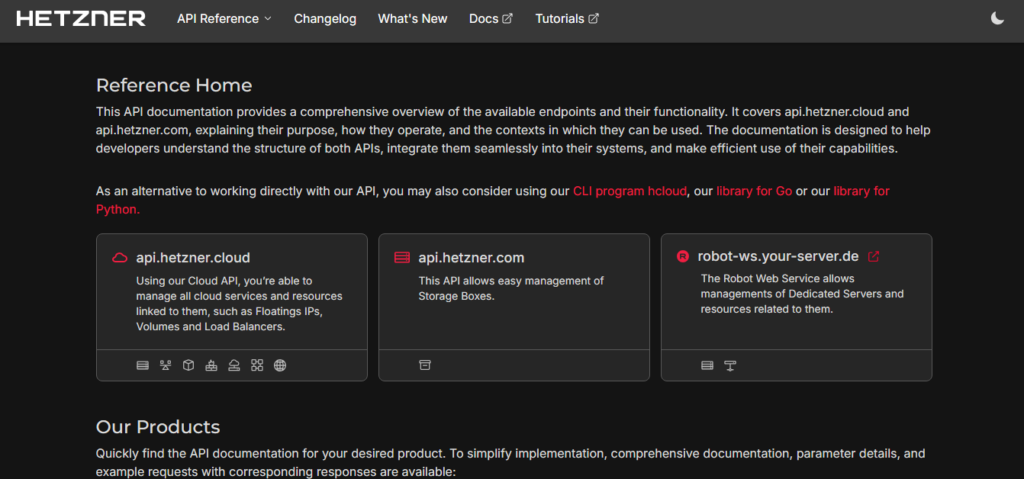
Hetzner is a Germany-based infrastructure provider known for its high-performance cloud servers, dedicated root servers, and large-scale data center operations in Europe and the United States. Founded in 1997, it has grown into one of the most trusted budget-to-performance VPS providers in Europe, widely used by developers, startups, and enterprises.
Hetzner is especially known for delivering enterprise-grade hardware (AMD EPYC CPUs and NVMe storage) at significantly lower pricing compared to major cloud platforms. It is commonly used for web hosting, SaaS applications, CI/CD pipelines, and self-hosted environments.
Key Features
- AMD EPYC and Intel Xeon processors
- NVMe SSD-based cloud instances
- Private networking and floating IPs
- Snapshot and backup support
- Firewall and security rules
- API and automation support (Terraform-compatible)
- Data centers in Germany, Finland, and the USA
Pricing
- Entry Cloud VPS: ~€4–€5/month
- Dedicated vCPU plans: mid-range pricing with high resource allocation
- Strong price-to-performance advantage vs Time4VPS
Pros & Cons
Pros:
- Excellent price-to-performance ratio
- High-quality European infrastructure
- Transparent pricing model
- Strong bandwidth allowances
Cons:
- Limited global regions compared to US-focused providers
- Strict account verification (KYC)
- Limited managed services
Social Media & Online Presence
- Website: Available
- LinkedIn: Hetzner Online GmbH
- X (Twitter): @Hetzner_Online
- Facebook: Hetzner Online
- Trustpilot: Strong mixed-to-positive reviews (~4+ rating range depending on region)
Best For
Best for developers, startups, and SaaS owners who want maximum performance at minimum cost in Europe, especially those comfortable managing their own servers.
Hetzner Cloud vs Time4VPS
Hetzner clearly outperforms Time4VPS in raw infrastructure quality, CPU performance, and automation capabilities. While Time4VPS is simpler for beginners, Hetzner offers significantly better scalability, faster NVMe performance, and a more developer-focused cloud ecosystem. However, Time4VPS may still be easier for users who want basic VPS hosting without cloud complexity.
2. DigitalOcean
DigitalOcean is a US-based cloud infrastructure provider founded in 2012 and headquartered in New York. It is one of the most widely adopted developer-focused cloud platforms in the world, known for its simplicity, predictable pricing, and strong documentation ecosystem. The company serves hundreds of thousands of customers globally, ranging from independent developers to fast-growing startups and mid-sized SaaS companies.
DigitalOcean is designed around simplicity and scalability, offering cloud “Droplets” (VPS instances), managed databases, Kubernetes clusters, and object storage. Its infrastructure is widely used for application hosting, API backends, staging environments, and production SaaS workloads.
Key Features
- SSD-based Droplets (VPS instances)
- Global data centers (USA, Europe, Asia)
- Managed Kubernetes (DOKS)
- Managed databases (PostgreSQL, MySQL, Redis)
- One-click app marketplace
- API + Terraform integration
- Monitoring and alerting tools
- Floating IPs and private networking
Pricing
- Basic Droplets: starting around $4–$6/month
- Premium CPU-optimized instances: higher-tier pricing for production workloads
- Managed services priced separately (databases, Kubernetes, storage)
Compared to Time4VPS, DigitalOcean is slightly more expensive but offers significantly more ecosystem tools and managed infrastructure options.
Pros & Cons
Pros:
- Extremely developer-friendly platform
- Excellent documentation and tutorials
- Global infrastructure coverage
- Reliable uptime and performance
- Strong API and automation tools
Cons:
- Higher cost than budget VPS providers like Time4VPS
- Limited customization compared to raw VPS hosts
- Managed services can become expensive at scale
Social Media & Online Presence
- Website: Available
- LinkedIn: DigitalOcean
- X (Twitter): @digitalocean
- Facebook: DigitalOcean
- Reddit: Active developer communities discussing use cases
- Trustpilot/G2: Generally strong developer-focused reviews
Best For
Best for developers, startups, and SaaS teams that need a simple but powerful cloud platform with strong tooling and global reach.
DigitalOcean vs Time4VPS
DigitalOcean wins in developer experience, automation, and ecosystem maturity. It provides a far more polished cloud platform with managed services and global scalability. However, Time4VPS remains cheaper for basic VPS use cases and may be more cost-effective for simple hosting needs without requiring advanced cloud features.
3. Vultr
Vultr is a US-based cloud infrastructure provider founded in 2014 and headquartered in New Jersey. It has built a strong reputation as a high-performance, developer-friendly VPS and cloud hosting platform with one of the widest global datacenter networks in the industry. With millions of deployments worldwide, Vultr is commonly used for web hosting, application backends, gaming servers, and latency-sensitive workloads.
Unlike traditional budget VPS providers, Vultr focuses on delivering scalable cloud compute resources across multiple continents with consistent performance. Its infrastructure is widely considered a step up from entry-level VPS providers like Time4VPS, especially for users who need global reach and fast deployment.
Key Features
- 20+ global datacenter locations
- High-frequency compute and AMD-based instances
- NVMe SSD storage options
- One-click app marketplace
- Block storage and snapshots
- Private networking and floating IPs
- Kubernetes and load balancers
- API and infrastructure automation tools
Pricing
- Cloud VPS (entry level): ~$5/month
- High-frequency compute: higher pricing for performance workloads
- Bare metal servers: premium pricing for enterprise use cases
Compared to Time4VPS, Vultr offers significantly better global coverage and more advanced infrastructure options, but at a slightly higher cost depending on region and configuration.
Pros & Cons
Pros:
- Excellent global server distribution
- Fast provisioning and deployment
- Strong performance with NVMe and AMD hardware
- Flexible instance types for different workloads
- Developer-friendly API and UI
Cons:
- Slightly more expensive than budget VPS providers
- Some advanced features locked behind higher tiers
- Support experience varies depending on plan
Social Media & Online Presence
- Website: Available
- LinkedIn: Vultr
- X (Twitter): @Vultr
- Facebook: Vultr
- Reddit: Active discussions in hosting and DevOps communities
- Trustpilot/G2: Mixed-to-positive reviews depending on region and use case
Best For
Best for developers, startups, and global applications that require low-latency hosting across multiple regions worldwide.
Vultr vs Time4VPS
Vultr clearly outperforms Time4VPS in global infrastructure coverage, deployment speed, and instance variety. While Time4VPS is more focused on affordable European VPS hosting, Vultr provides a far more scalable platform for international applications. However, Time4VPS may still be preferable for users strictly focused on low-cost EU-based hosting.
4. PQ.Hosting
PQ.Hosting is a rapidly growing VPS hosting provider known for offering low-cost virtual servers across multiple European and Asian locations. It has gained attention in recent years as a budget-friendly alternative to traditional European VPS providers like Time4VPS, especially among users who want more geographic flexibility without moving into expensive cloud platforms.
The company focuses on delivering affordable KVM-based VPS solutions with NVMe storage and a wide selection of server locations. Its appeal lies in aggressive pricing, frequent promotions, and expansion into multiple jurisdictions, making it attractive for freelancers, small businesses, and users running lightweight to medium workloads such as websites, proxies, VPNs, and test environments.
Key Features
- KVM-based VPS virtualization
- NVMe SSD storage for faster performance
- Multiple EU and Asia server locations
- IPv4 and IPv6 support
- Full root access
- Instant VPS provisioning
- Linux and Windows OS support
- DDoS protection (varies by location)
Pricing
- Entry VPS plans: ~$3–$4/month
- Mid-tier plans: increased RAM/CPU allocations at competitive rates
- Discounted long-term billing options available
Compared to Time4VPS, PQ.Hosting is often cheaper and offers broader location diversity, but may not match the same level of brand maturity or long-term reputation.
Pros & Cons
Pros:
- Very affordable VPS plans
- Wide geographic server distribution
- NVMe storage included in most plans
- Good performance for budget hosting
- Frequent discounts and promotions
Cons:
- Smaller brand reputation compared to established providers
- Support experience can vary
- Limited enterprise-grade features
Social Media & Online Presence
- Website: Available
- LinkedIn: Limited official presence
- X (Twitter): Minimal activity
- Facebook: Basic company page presence
- Reddit: Mentioned in VPS hosting discussions
- Trustpilot/G2: Mixed reviews depending on region and plan type
Best For
Best for users who want a low-cost VPS alternative to Time4VPS with more regional flexibility, especially for personal projects, VPN hosting, and lightweight production workloads.
PQ.Hosting vs Time4VPS
PQ.Hosting competes directly with Time4VPS in the budget VPS segment but differentiates itself with more aggressive pricing and broader geographic availability. While Time4VPS is often considered more stable and established in the European market, PQ.Hosting appeals to users prioritizing cost savings and location variety over long-term brand reputation.
5. GreenCloud VPS
GreenCloud VPS is a performance-focused hosting provider offering KVM-based virtual private servers across multiple global locations, including the United States, Europe, and Asia. It has built a strong presence in the VPS enthusiast community for delivering consistent hardware performance and flexible hosting configurations at mid-range pricing.
Unlike ultra-budget providers, GreenCloud VPS positions itself between entry-level VPS hosting and enterprise cloud platforms. It is often chosen by developers and system administrators who want more stable performance than cheap VPS providers like Time4VPS, but without the complexity or cost of full cloud ecosystems.
The company is especially popular for game servers, VPN setups, small business applications, and self-hosted platforms requiring reliable CPU performance and stable network throughput.
Key Features
- KVM virtualization with dedicated resource allocation
- NVMe SSD storage options
- Multiple global locations (USA, Europe, Asia)
- IPv4 and IPv6 support
- DDoS protection (location-dependent)
- Full root access and custom ISO support
- VPS snapshots and backups
- Multiple Linux and Windows OS templates
Pricing
- Entry VPS plans: around $6/month
- Mid-tier performance VPS: higher RAM/CPU configurations
- Higher-tier plans for sustained workloads and heavier applications
Compared to Time4VPS, GreenCloud VPS typically offers stronger and more consistent hardware performance, but at a slightly higher price point.
Pros & Cons
Pros:
- Reliable and stable KVM performance
- Good balance between price and performance
- Multiple global server locations
- Suitable for production workloads
- Flexible OS and customization options
Cons:
- Smaller ecosystem compared to major cloud providers
- Limited advanced managed services
- Not as budget-optimized as Time4VPS
Social Media & Online Presence
- Website: Available
- LinkedIn: GreenCloud VPS (company page presence varies)
- X (Twitter): Limited but active updates
- Facebook: Basic official page
- Reddit: Mentioned in VPS and hosting communities
- Trustpilot/G2: Mixed-to-positive reviews depending on region
Best For
Best for users who want a stable, performance-oriented VPS alternative to Time4VPS, especially for production apps, game servers, and medium-scale hosting projects.
GreenCloud VPS vs Time4VPS
GreenCloud VPS generally provides more consistent CPU performance and better resource stability compared to Time4VPS. While Time4VPS remains more affordable and beginner-friendly, GreenCloud VPS is better suited for users who need predictable performance for production workloads and cannot afford performance fluctuations.
6. RackNerd
RackNerd is a US-based hosting provider known for aggressively priced VPS hosting plans and long-term promotional deals. It has become especially popular in the budget hosting community due to its frequent low-cost offers, making it one of the most cost-effective alternatives to Time4VPS for users prioritizing price over advanced cloud features.
The company primarily operates VPS and dedicated server solutions across multiple US-based data centers, with some additional global reach depending on promotions. RackNerd is widely used for personal projects, small websites, VPN servers, testing environments, and lightweight production workloads.
While it does not compete directly with enterprise cloud platforms, it stands out in the ultra-budget VPS category, often offering more RAM and storage per dollar compared to traditional European providers like Time4VPS.
Key Features
- KVM-based VPS hosting
- SSD storage across all plans
- Multiple US data center locations
- Full root access
- IPv4 and IPv6 support
- Instant provisioning on most plans
- Linux and Windows OS templates
- Frequent promotional and lifetime-style deals
Pricing
- Entry VPS plans: ~$1–$3/month (promotional pricing)
- Standard VPS tiers: low-cost monthly billing options
- Dedicated servers: mid-range pricing depending on configuration
Compared to Time4VPS, RackNerd is significantly cheaper in many promotional offers, but it focuses more on cost efficiency than infrastructure sophistication or global reach.
Pros & Cons
Pros:
- Extremely low-cost VPS plans
- Generous resource allocations for price
- Frequent discounts and deals
- Simple and straightforward VPS setup
- Good for lightweight workloads
Cons:
- Limited global server locations
- Less advanced cloud features
- Support quality varies based on demand
- Not ideal for enterprise-grade workloads
Social Media & Online Presence
- Website: Available
- LinkedIn: Limited corporate presence
- X (Twitter): Occasional updates
- Facebook: Basic official page
- Reddit: Frequently discussed in VPS deal communities
- Trustpilot/G2: Mixed reviews depending on deal type and support experience
Best For
Best for users looking for a highly affordable VPS alternative to Time4VPS, especially for testing, small projects, VPN hosting, and budget deployments.
RackNerd vs Time4VPS
RackNerd wins heavily on price and promotional value, often offering more resources for less cost than Time4VPS. However, Time4VPS provides a more stable European infrastructure and a more established hosting environment. RackNerd is better for cost-focused users, while Time4VPS is better for balanced EU-based hosting reliability.
7. OVHcloud
OVHcloud is a France-based global cloud infrastructure provider and one of the largest hosting companies in Europe. Founded in 1999, it operates massive data center networks across Europe, North America, and other regions, offering VPS, public cloud, dedicated servers, and enterprise-grade hosting solutions.
OVHcloud is widely used by businesses, developers, and organizations that need scalable infrastructure with strong networking capabilities and built-in DDoS protection. Compared to Time4VPS, OVHcloud is positioned as a more enterprise-ready platform with a significantly larger infrastructure footprint and broader service portfolio.
Key Features
- VPS, public cloud, and dedicated servers
- Global data center presence (EU, US, Canada, Asia)
- Advanced DDoS protection included by default
- High bandwidth allowances
- Private networking and vRack technology
- API and automation tools
- Object storage and cloud databases
- Bare metal and hybrid cloud options
Pricing
- Entry VPS plans: ~$5–$7/month
- Public cloud instances: scalable pay-as-you-go pricing
- Dedicated servers: mid to high-tier depending on hardware
OVHcloud is generally more expensive than Time4VPS at the entry level, but it provides significantly more infrastructure depth and scalability for growing businesses.
Pros & Cons
Pros:
- Massive global infrastructure network
- Strong built-in DDoS protection
- Wide range of hosting products
- Reliable performance for enterprise workloads
- Good scalability options
Cons:
- Support experience can be inconsistent
- Interface can feel complex for beginners
- Some services require technical expertise
Social Media & Online Presence
- Website: Available
- LinkedIn: OVHcloud
- X (Twitter): @OVHcloud
- Facebook: OVHcloud
- Reddit: Active discussions in DevOps communities
- Trustpilot/G2: Mixed reviews depending on region and service type
Best For
Best for businesses and developers who need scalable, enterprise-grade infrastructure with strong networking and security features.
OVHcloud vs Time4VPS
OVHcloud significantly outclasses Time4VPS in infrastructure scale, product variety, and enterprise readiness. While Time4VPS is simpler and cheaper for basic VPS use, OVHcloud provides advanced cloud architecture, better security features, and far greater scalability for production environments.
8. AlexHost
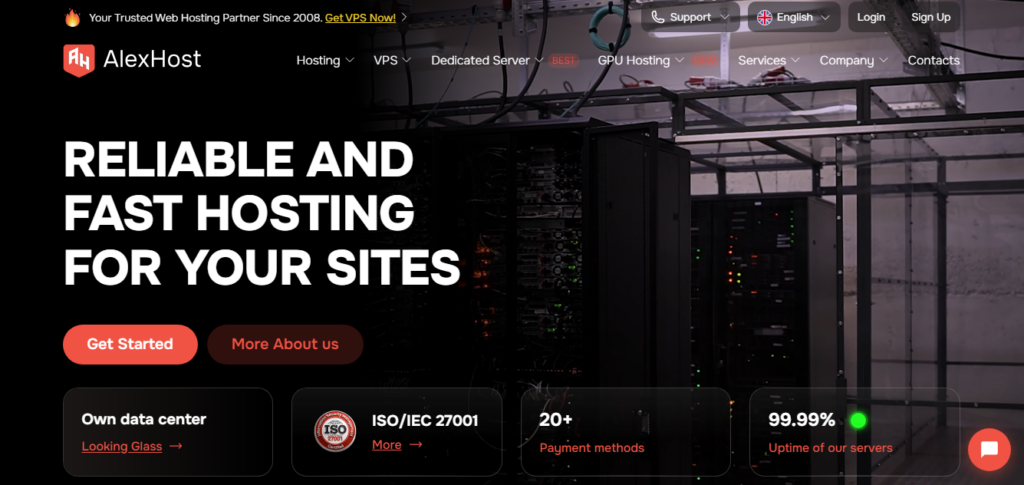
AlexHost is a Moldova-based hosting provider known for its offshore-friendly infrastructure and privacy-oriented hosting solutions. It has gained popularity among users who prioritize data privacy, relaxed content policies (within legal limits), and jurisdictional flexibility compared to more strictly regulated European providers.
The company offers VPS hosting, dedicated servers, and colocation services, with a focus on providing stable infrastructure in a jurisdiction that is often considered more flexible for certain types of hosting use cases. Compared to Time4VPS, AlexHost is more niche-focused, particularly appealing to users who want hosting outside strict EU regulatory frameworks.
Key Features
- Offshore VPS hosting in Moldova
- KVM-based virtual servers
- SSD/NVMe storage options
- Full root access
- IPv4 and IPv6 support
- DDoS protection options
- Multiple OS templates (Linux and Windows)
- Cryptocurrency payment support (varies by plan)
Pricing
- Entry VPS plans: ~$5–$6/month
- Mid-tier VPS: scalable RAM and CPU options
- Dedicated servers: higher pricing based on configuration
Compared to Time4VPS, AlexHost is slightly more expensive in some configurations but offers greater flexibility in hosting jurisdiction and privacy-focused deployment options.
Pros & Cons
Pros:
- Privacy-friendly hosting environment
- Offshore jurisdiction flexibility
- Accepts multiple payment methods including crypto (availability varies)
- Stable VPS performance for general workloads
- Suitable for specialized hosting needs
Cons:
- Smaller infrastructure network compared to major providers
- Limited global data center diversity
- Not as developer-ecosystem rich as cloud giants
- Support responsiveness can vary
Social Media & Online Presence
- Website: Available
- LinkedIn: Limited corporate presence
- X (Twitter): Minimal activity
- Facebook: Official page available
- Reddit: Occasionally discussed in privacy hosting communities
- Trustpilot/G2: Mixed-to-positive reviews depending on use case
Best For
Best for users who need a privacy-focused or offshore-friendly VPS alternative to Time4VPS, especially for projects requiring jurisdictional flexibility or reduced regulatory constraints.
AlexHost vs Time4VPS
AlexHost offers stronger privacy orientation and offshore hosting flexibility compared to Time4VPS, which is more EU-regulated and mainstream. However, Time4VPS generally provides a more established and predictable European hosting environment, making it better for standard business workloads, while AlexHost is better suited for niche or privacy-sensitive deployments.
9. Contabo
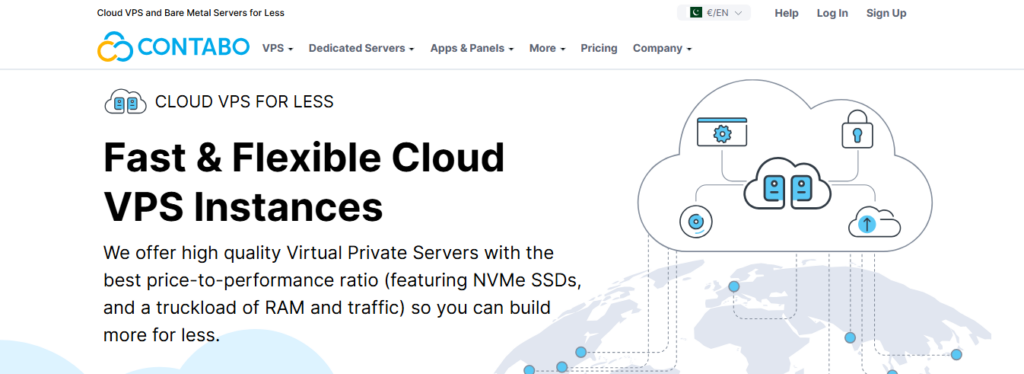
Contabo is a Germany-based hosting provider founded in 2003, widely recognized for offering extremely high-resource VPS and dedicated server plans at competitive prices. It has built a strong reputation among developers, system administrators, and small businesses who need large amounts of RAM and storage without paying premium cloud prices.
Compared to Time4VPS, Contabo is often chosen when workloads require significantly more resources per dollar, such as database hosting, large applications, game servers, or self-hosted platforms. Its infrastructure is primarily based in Europe with additional availability in the United States and select global regions.
Key Features
- High-RAM VPS configurations (very large memory allocations)
- HDD and SSD/NVMe storage options
- KVM virtualization
- Multiple data center locations (Germany, USA, Asia availability depending on plan)
- Full root access
- IPv4 and IPv6 support
- Optional backup services
- Dedicated servers and storage VPS options
Pricing
- Entry VPS plans: ~$5–$6/month
- High-resource VPS plans: mid-range pricing with large RAM/storage
- Dedicated servers: competitive pricing for hardware-heavy workloads
Contabo is often cheaper than Time4VPS when comparing raw resource allocation, especially in RAM and storage, but may differ in performance consistency depending on workload type.
Pros & Cons
Pros:
- Extremely high resource allocations for low cost
- Great value for storage-heavy workloads
- Flexible VPS and dedicated server options
- Strong presence in European hosting market
- Good for scalable personal and business projects
Cons:
- Performance consistency can vary under heavy load
- Setup and provisioning may be slower than cloud-native providers
- Support experience is average compared to premium hosts
- Not ideal for low-latency enterprise applications
Social Media & Online Presence
- Website: Available
- LinkedIn: Contabo GmbH
- X (Twitter): Limited activity
- Facebook: Official company page
- Reddit: Frequently discussed in VPS hosting communities
- Trustpilot/G2: Mixed reviews, often praised for value
Best For
Best for users who need a resource-heavy VPS alternative to Time4VPS, especially for applications requiring large RAM, storage-heavy workloads, or budget-friendly dedicated performance.
Contabo vs Time4VPS
Contabo outperforms Time4VPS in raw resource allocation and price-to-hardware ratio, especially for RAM and storage-heavy workloads. However, Time4VPS often provides more consistent performance and a more predictable entry-level VPS experience, making it better for lightweight production use, while Contabo is better for heavy workloads that prioritize capacity over consistency.
10. ScalaHosting
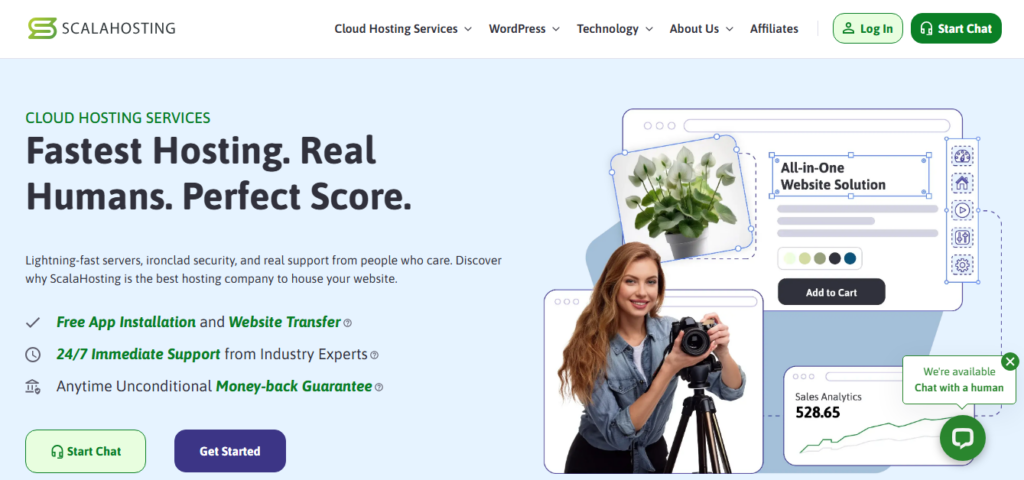
ScalaHosting is a US-based managed VPS and cloud hosting provider founded in 2007, with a strong focus on simplifying server management for businesses, agencies, and non-technical users. Unlike Time4VPS, which primarily offers unmanaged VPS infrastructure, ScalaHosting specializes in fully managed VPS solutions where server maintenance, security hardening, and technical support are handled by the provider.
It is particularly well known for its proprietary SPanel control panel, which serves as an alternative to cPanel and is designed to reduce licensing costs while offering a streamlined hosting experience. ScalaHosting operates globally with data centers in the US and Europe, making it a strong option for users who want managed hosting with international coverage.
Key Features
- Fully managed VPS hosting
- SPanel control panel (cPanel alternative)
- Free website migration services
- Daily backups and automated snapshots
- Built-in security monitoring and firewall
- SSD/NVMe storage depending on plan
- Scalable cloud VPS infrastructure
- Global data center locations (US & Europe)
Pricing
- Managed VPS plans: starting around $10+/month
- Higher-tier VPS: increased CPU/RAM with full management included
- Cloud VPS options: scalable pricing based on resources
Compared to Time4VPS, ScalaHosting is more expensive but includes full server management, making it a strong option for users who prefer not to handle technical server administration.
Pros & Cons
Pros:
- Fully managed VPS reduces technical workload
- Excellent customer support reputation
- Free migration services
- Strong security and monitoring features
- User-friendly SPanel control panel
Cons:
- Higher pricing than unmanaged VPS providers like Time4VPS
- Less control for advanced system administrators
- Limited customization compared to raw VPS access providers
Social Media & Online Presence
- Website: Available
- LinkedIn: ScalaHosting
- X (Twitter): @ScalaHosting
- Facebook: ScalaHosting
- Reddit: Positive discussions in hosting communities
- Trustpilot/G2: Generally strong reviews for support and managed services
Best For
Best for users who want a fully managed VPS alternative to Time4VPS, especially businesses, agencies, and non-technical users who prefer hands-off server management.
ScalaHosting vs Time4VPS
ScalaHosting is significantly more service-oriented than Time4VPS, offering full server management, security handling, and migration support. While Time4VPS is more affordable and suitable for users comfortable managing their own servers, ScalaHosting is better for those who prioritize convenience, support, and reduced technical complexity.
Final Verdict for Which Time4VPS Alternative Should You Choose?
Choosing the right alternative to Time4VPS in 2026 depends heavily on your budget, technical experience, and the type of workload you plan to run. While Time4VPS remains a solid entry-level VPS provider in Europe, many users eventually upgrade to platforms that offer better performance, broader global infrastructure, or more advanced cloud and managed services.
If your priority is maximum performance at the lowest possible cost in Europe, Hetzner Cloud is the strongest overall upgrade. It consistently delivers enterprise-grade hardware, excellent network stability, and highly competitive pricing, making it ideal for developers, SaaS platforms, and production workloads.
For users who want a developer-friendly cloud ecosystem with global reach and managed services, DigitalOcean is the most balanced choice. It offers a smooth experience for deploying applications, APIs, and scalable backend systems without requiring deep server administration knowledge.
If your focus is global deployment and multi-region hosting, Vultr stands out due to its wide network of data centers across multiple continents, making it ideal for latency-sensitive applications and international user bases.
For budget-focused users, providers like PQ.Hosting and RackNerd offer extremely low-cost VPS options, often outperforming Time4VPS on price, though with trade-offs in brand maturity or infrastructure consistency.
If you need high resource allocations, Contabo delivers exceptional RAM and storage value, making it suitable for heavy workloads, databases, and large applications.
For users who prefer managed hosting and reduced technical complexity, ScalaHosting is the best option, as it handles server maintenance, security, and migrations on your behalf.
Finally, for privacy-focused or offshore hosting needs, AlexHost provides jurisdictional flexibility that may not be available with more mainstream European providers.
Summary Recommendation:
- Best overall upgrade: Hetzner Cloud
- Best for developers: DigitalOcean
- Best global coverage: Vultr
- Best budget option: PQ.Hosting / RackNerd
- Best managed VPS: ScalaHosting
Ultimately, the right choice depends on whether you value cost savings, performance, global reach, or managed convenience. Each alternative in this list offers a meaningful upgrade over Time4VPS in at least one key area, allowing you to match your hosting platform precisely to your project needs.
Frequently Asked Questions (FAQs)
Is Time4VPS still a good VPS provider in 2026?
Time4VPS remains a solid choice for beginners and users who want affordable European VPS hosting. It provides stable performance for small websites, VPNs, and lightweight applications. However, it lacks the global infrastructure, advanced cloud tooling, and scalability offered by modern providers like Hetzner or Vultr, making it less suitable for growing or enterprise-level projects.
Which Time4VPS alternative offers the best European server coverage?
Hetzner Cloud and OVHcloud are the strongest options for European coverage. Hetzner offers high-performance infrastructure in Germany and Finland, while OVHcloud provides a broader enterprise-grade network across Europe with strong DDoS protection and scalability features.
What is the easiest way to migrate from Time4VPS to another provider?
Migration typically involves creating a backup of your server (files, databases, configurations), deploying a new VPS on the target provider, and transferring data using tools like rsync, SCP, or automated migration services. Some providers like ScalaHosting even offer free migration assistance to simplify the process.
Which alternative provides the best performance-to-price ratio?
Hetzner Cloud and Contabo offer some of the best performance-to-price ratios. Hetzner excels in CPU and NVMe performance, while Contabo provides extremely large RAM and storage allocations at low cost, making both excellent depending on workload type.
Are there any privacy-focused alternatives to Time4VPS?
Yes, providers like AlexHost offer more privacy-friendly hosting options with offshore jurisdiction flexibility. These are often used for projects requiring additional data privacy considerations, though users should always ensure compliance with local laws.
Which Time4VPS competitor is best for developers?
DigitalOcean and Vultr are the best choices for developers. DigitalOcean offers a simple and well-documented ecosystem, while Vultr provides more global infrastructure options for deploying applications closer to end users worldwide.
Can switching VPS providers improve website speed?
Yes, switching providers can significantly improve website speed if the new VPS has better hardware (CPU, NVMe storage), a closer data center location, or a more optimized network. Latency reduction and improved server performance often result in faster load times and better user experience.
Which alternative offers the best managed VPS experience?
ScalaHosting is the strongest managed VPS alternative. It handles server maintenance, security updates, backups, and migration, making it ideal for users who want a hands-off hosting experience without managing technical server tasks.
Are cheaper VPS providers reliable for production workloads?
Some budget VPS providers can be reliable for production use, but it depends on workload requirements. Providers like Hetzner can handle production-grade workloads effectively, while ultra-cheap options like RackNerd may be better suited for non-critical or lightweight applications.
What should I check before moving away from Time4VPS?
Before migrating, ensure you have full backups, understand your new provider’s server location and latency impact, check OS compatibility, verify resource allocation, and plan DNS changes carefully to avoid downtime. Proper migration planning ensures a smooth transition without affecting your services.