Finding a reliable hosting provider is becoming increasingly important as businesses, developers, content publishers, and online service operators demand higher performance, stronger security, and greater infrastructure flexibility. While Serveria has established itself as a recognized provider within the offshore hosting and VPS market, many users eventually begin exploring alternative hosting companies that can offer broader infrastructure options, enhanced network performance, or more specialized hosting services.
This guide examines the Best Serveria Alternatives available in 2026. The rankings focus on providers that excel in offshore hosting, VPS hosting, dedicated servers, privacy-focused infrastructure, advanced DDoS protection, scalable cloud environments, and high-performance hosting solutions. Whether you are running a privacy-sensitive project, a growing SaaS platform, a gaming application, or a high-traffic website, choosing the right hosting provider can have a significant impact on performance, reliability, and long-term scalability.
The providers featured in this comparison were selected based on infrastructure quality, hosting flexibility, network performance, privacy features, customer satisfaction, and overall value. Each competitor offers unique advantages that may make it a better fit than Serveria depending on your specific requirements.
Introduction
Serveria has built a strong reputation within the hosting industry by offering offshore hosting services, VPS solutions, dedicated servers, and privacy-friendly infrastructure designed for customers who require greater operational flexibility than many mainstream hosting providers provide. Its services are frequently used by developers, online businesses, content publishers, VPN operators, and organizations seeking reliable hosting environments with flexible content policies and international deployment options.
One of Serveria’s primary strengths has traditionally been its focus on offshore-friendly hosting combined with scalable VPS and dedicated server offerings. Customers often appreciate the provider’s infrastructure flexibility, privacy-conscious approach, and support for projects that may not fit neatly within the policies of traditional hosting companies.
However, hosting requirements rarely remain static. As websites and applications grow, users often begin looking for providers that offer broader server location choices, more advanced hardware configurations, stronger uptime guarantees, faster network performance, enhanced DDoS protection, lower operating costs, or more responsive customer support. Others may require enterprise-grade infrastructure, specialized cloud services, or greater scalability for resource-intensive workloads.
Fortunately, the hosting market has evolved considerably, and several providers now offer compelling alternatives that address many of the reasons users choose to migrate away from Serveria. In this guide, we review the top Serveria competitors for 2026 and highlight the strengths that make each provider worth considering.
How This List Was Created
To identify the best alternatives to Serveria, we evaluated each hosting provider using a comprehensive set of criteria focused on the needs of VPS users, dedicated server customers, offshore hosting clients, and businesses requiring scalable infrastructure.
Infrastructure quality was one of the most heavily weighted factors. We examined server hardware, storage technology, network performance, virtualization platforms, and overall reliability. Providers utilizing modern processors, NVMe storage, high-capacity networking, and enterprise-grade hardware generally scored higher than providers relying on older infrastructure.
Jurisdiction flexibility also played an important role. Because many Serveria customers value offshore hosting options and privacy-focused environments, we assessed each provider’s server locations, regional deployment options, and overall suitability for projects requiring greater operational flexibility.
We also reviewed uptime guarantees, historical reliability, DDoS mitigation capabilities, scalability options, and infrastructure expansion potential. Providers that demonstrated strong performance under demanding workloads received additional consideration.
Customer experience was another key factor. Public reviews, community discussions, industry feedback, and hosting forum recommendations were analyzed to evaluate customer satisfaction, support responsiveness, and long-term reputation.
Pricing transparency was carefully reviewed to ensure that providers clearly communicate costs, resource allocations, renewal pricing, and upgrade options. Hidden fees and unclear pricing structures negatively impacted rankings.
Only active hosting providers with publicly available pricing, established service offerings, and verifiable user feedback were included in this list.
Quick Comparison of the Top Serveria Alternatives
| Provider | Starting Price | Server Locations | Uptime SLA | DMCA Policy | Best For | Rating |
| DataPacket | $6/month | Global Network | 99.99% | Standard | High-Performance Infrastructure | 9.6/10 |
| MonoVM | $4.95/month | Worldwide | 99.9% | Standard | Global VPS Hosting | 9.4/10 |
| PQ.Hosting | $4.77/month | 40+ Countries | 99.9% | Offshore-Friendly | Jurisdiction Diversity | 9.4/10 |
| Cherry Servers | $6/month | Europe & Global | 99.95% | Standard | Dedicated Servers | 9.3/10 |
| HostBrr | $3.99/month | Europe | 99.9% | Flexible | Budget VPS Hosting | 9.1/10 |
| Layer7 Networks | Custom | North America & Europe | 99.99% | Flexible | DDoS-Protected Hosting | 9.2/10 |
| Sakura Internet | $7/month | Japan & APAC | 99.99% | Standard | Asia-Pacific Infrastructure | 9.2/10 |
| Time4VPS | $2.99/month | Europe | 99.9% | Standard | Affordable VPS Hosting | 9.0/10 |
| Evolution Host | $5/month | Multiple Regions | 99.9% | Flexible | Gaming & VPS Hosting | 9.1/10 |
| Contabo | $4.50/month | Global Locations | 99.9% | Standard | High Resource VPS Plans | 9.3/10 |
Top 10 Serveria Alternatives & Competitors in 2026
The alternatives featured in this ranking were selected based on the most common reasons customers leave Serveria rather than simple brand recognition or company size. Some users migrate because they need broader global server coverage, while others prioritize lower pricing, stronger DDoS protection, more powerful hardware, better support responsiveness, or access to specialized infrastructure.
Several providers on this list focus heavily on performance and enterprise-grade networking, while others specialize in affordable VPS hosting, offshore-friendly deployments, privacy-conscious hosting environments, or large-scale international infrastructure. This diversity ensures that users with different technical requirements can identify a provider that better matches their long-term goals.
Whether your priority is high-performance cloud infrastructure, dedicated servers, offshore hosting flexibility, budget-friendly VPS plans, or enterprise-level scalability, the following providers represent some of the strongest Serveria alternatives available in 2026.
1. DataPacket
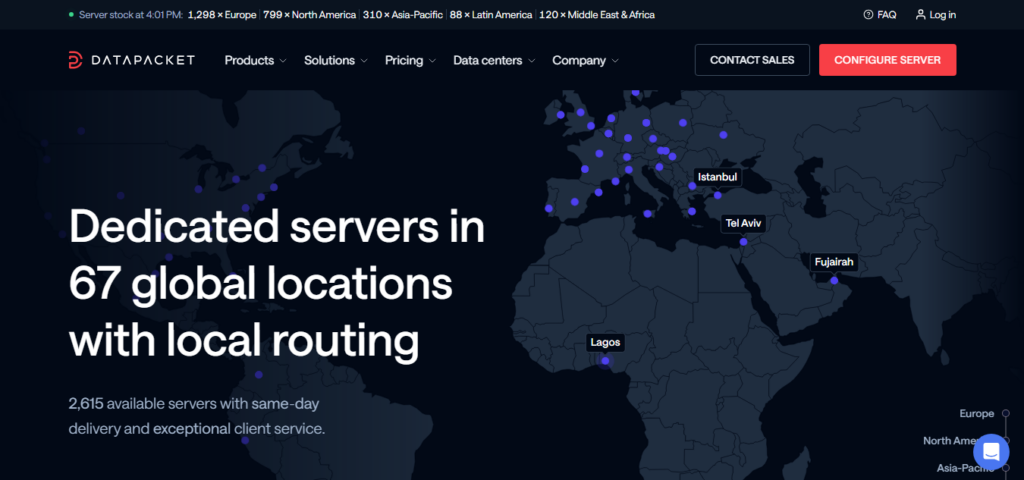
For users leaving Serveria because they need stronger network performance, larger infrastructure scale, and enterprise-grade connectivity, DataPacket is the strongest overall alternative in 2026. While Serveria has built a solid reputation within the offshore hosting and VPS market, DataPacket focuses heavily on premium network engineering, global backbone connectivity, and high-performance infrastructure designed for demanding workloads.
The company has gained significant attention among SaaS providers, gaming companies, streaming platforms, developers, and businesses operating latency-sensitive applications. Rather than competing solely on pricing, DataPacket differentiates itself through network quality, routing optimization, and infrastructure scalability. For organizations that view hosting infrastructure as a critical business asset rather than a commodity service, DataPacket offers capabilities that extend well beyond traditional VPS hosting.
About DataPacket
DataPacket is a global infrastructure provider specializing in high-performance VPS hosting, cloud services, dedicated servers, and enterprise connectivity solutions. The company has expanded rapidly in recent years by investing in a private backbone network that connects major internet exchanges and data centers across multiple continents.
Unlike many hosting providers that rely heavily on third-party transit networks, DataPacket has focused on building and optimizing its own network architecture to improve routing efficiency, reduce latency, and enhance overall reliability. This strategy has helped the company establish a reputation for premium connectivity and predictable performance.
Its infrastructure serves a diverse customer base that includes SaaS companies, fintech platforms, gaming operators, content delivery services, developers, media businesses, and organizations running mission-critical applications. DataPacket’s network spans major global markets and continues expanding into new regions, giving customers access to a broader infrastructure footprint than many traditional VPS providers.
One of the company’s most notable strengths is its emphasis on network quality rather than simply increasing server density. This makes it particularly attractive for businesses where application responsiveness, uptime consistency, and international connectivity directly impact revenue and customer experience.
Key Features
- High-performance VPS hosting
- Dedicated server solutions
- Global backbone network
- Low-latency routing
- Enterprise-grade hardware
- Advanced DDoS protection
- API-driven infrastructure management
- Cloud deployment options
- Multiple international locations
- Scalable enterprise infrastructure
Pricing
DataPacket’s pricing is positioned in the premium VPS and cloud infrastructure segment. Entry-level VPS plans are suitable for websites, development environments, and smaller business applications, while higher-tier plans target demanding workloads requiring greater CPU, memory, storage, and network capacity.
Dedicated server offerings are available for organizations requiring full hardware control and guaranteed resource allocation. Enterprise customers can also deploy custom infrastructure solutions designed around specific performance and scalability requirements.
Compared with Serveria, DataPacket generally commands slightly higher pricing. However, many customers view the additional cost as justified due to the stronger network performance, larger infrastructure footprint, and enterprise-focused architecture. Businesses prioritizing uptime, low latency, and long-term scalability often find DataPacket delivers greater overall value despite its premium positioning.
Pros & Cons
Pros
- Exceptional network performance and routing quality
- Global infrastructure footprint with strong international connectivity
- Enterprise-grade hardware and infrastructure
- Excellent scalability for growing businesses
- Suitable for demanding applications and high-traffic workloads
Cons
- More expensive than budget VPS providers
- Some advanced services may be unnecessary for smaller projects
- Enterprise-focused offerings can increase complexity
- Fewer anonymity-focused features than offshore specialists
Social Media & Online Presence
DataPacket maintains an active presence across professional and hosting communities.
Online Presence Includes:
- Official website
- LinkedIn company page
- X (Twitter) profile
- Facebook page
- Trustpilot review profile
- Hosting industry review websites
- Infrastructure and networking communities
Review scores, customer counts, and social media metrics change regularly and should be verified before publication.
Best For
DataPacket is best suited for:
- SaaS platforms
- Enterprise applications
- Gaming companies
- Streaming services
- High-traffic websites
- Developers requiring low-latency infrastructure
- Businesses prioritizing network performance
DataPacket vs Serveria
While Serveria is known for offshore hosting flexibility and privacy-friendly infrastructure, DataPacket excels in network engineering, connectivity quality, and enterprise-grade scalability. Users focused primarily on performance, uptime consistency, and global reach often find DataPacket to be a significant upgrade. Serveria may remain attractive for users seeking offshore-friendly hosting environments, but DataPacket typically delivers superior infrastructure depth and international network performance.
2. MonoVM
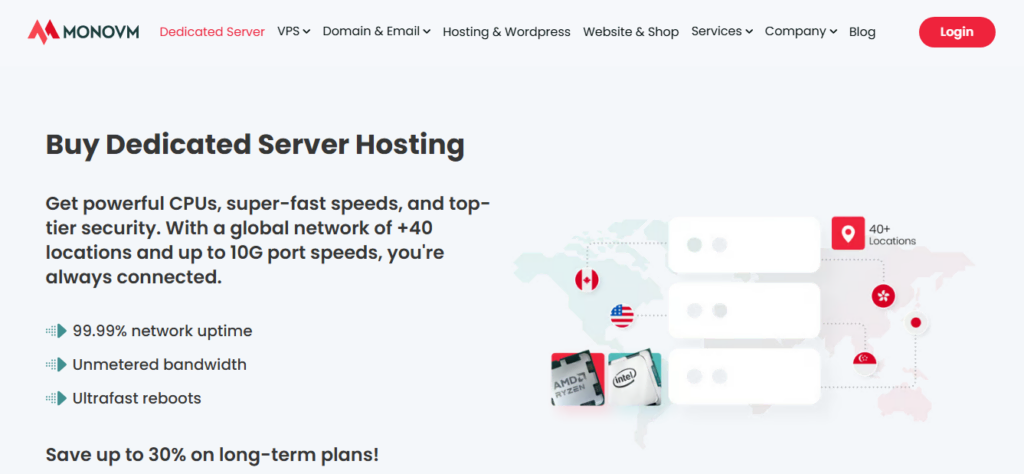
MonoVM has become one of the most versatile VPS hosting providers in the market by offering a wide range of deployment options, operating systems, server locations, and infrastructure configurations. For users who feel limited by Serveria’s available locations or service flexibility, MonoVM provides one of the broadest VPS ecosystems available in 2026.
The provider is particularly attractive to developers, agencies, software companies, and growing businesses that require the ability to deploy workloads across multiple geographic regions while maintaining a consistent management experience.
About MonoVM
MonoVM is an international hosting provider offering VPS hosting, cloud infrastructure, dedicated servers, reseller hosting, and business hosting solutions. Over the years, the company has expanded its presence through a growing network of data centers located across North America, Europe, Asia, and other major markets.
Unlike providers that focus heavily on offshore hosting, MonoVM emphasizes infrastructure diversity and deployment flexibility. Customers can choose from numerous server locations, operating systems, virtualization environments, and resource configurations depending on their technical requirements.
The company serves a broad audience ranging from individual developers and freelancers to agencies, SaaS businesses, eCommerce companies, and enterprise customers requiring geographically distributed infrastructure.
MonoVM’s growth has largely been driven by its ability to provide affordable VPS solutions without restricting users to a small number of deployment locations.
Key Features
- VPS hosting solutions
- Cloud server deployments
- Windows VPS hosting
- Linux VPS hosting
- Multiple worldwide server locations
- Flexible resource upgrades
- SSD and NVMe storage options
- Dedicated server availability
- Managed hosting options
- Scalable infrastructure environments
Pricing
MonoVM offers a wide range of VPS plans designed to accommodate different budgets and technical requirements. Entry-level plans provide affordable hosting for websites, development environments, and smaller applications, while advanced VPS configurations support resource-intensive workloads.
Managed service options are available for customers who prefer assistance with server administration and maintenance. Dedicated servers and cloud infrastructure can also be deployed as projects grow.
Compared with Serveria, MonoVM often provides greater deployment flexibility and broader server location availability at similar pricing levels. This makes it particularly attractive for organizations operating across multiple regions.
Pros & Cons
Pros
- Extensive global server coverage
- Strong VPS customization options
- Windows and Linux hosting availability
- Scalable infrastructure for growing businesses
- Competitive pricing across multiple service tiers
Cons
- Less focused on offshore hosting than Serveria
- Privacy-oriented features vary by location
- Some advanced configurations may require technical expertise
- Support quality can vary depending on service tier
Social Media & Online Presence
MonoVM maintains visibility through:
- Official website
- Trustpilot profile
- LinkedIn company page
- Facebook page
- X (Twitter) account
- Hosting review websites
- Technology communities
Best For
MonoVM is ideal for:
- Developers
- Agencies
- SaaS companies
- International businesses
- Multi-region deployments
- Organizations requiring infrastructure flexibility
MonoVM vs Serveria
MonoVM offers significantly greater deployment flexibility and location diversity than Serveria. While Serveria appeals to users seeking offshore-friendly hosting environments, MonoVM excels at providing a broad range of VPS configurations across numerous geographic regions. Businesses operating internationally often find MonoVM to be the more scalable long-term solution.
3. PQ.Hosting
PQ.Hosting has emerged as one of the fastest-growing VPS providers in the international hosting market thanks to its extraordinary range of server locations. For users whose primary concern is geographic diversity and deployment flexibility, PQ.Hosting is one of the strongest alternatives to Serveria available today.
About PQ.Hosting
PQ.Hosting specializes in VPS hosting and international infrastructure deployments. The company has expanded aggressively over recent years by launching servers in dozens of countries, making it one of the most geographically diverse VPS providers currently operating.
Its customer base includes developers, privacy-focused users, international businesses, VPN operators, cryptocurrency projects, and organizations requiring infrastructure in less common jurisdictions. The provider’s large location portfolio is particularly attractive to users who need local presence in specific regions without relying on multiple hosting vendors.
The company’s growth strategy has focused on combining affordable VPS pricing with widespread geographic availability, helping it establish a strong reputation among users who prioritize location choice.
Key Features
- Dozens of global server locations
- VPS hosting solutions
- Cryptocurrency payment support
- IPv4 and IPv6 availability
- DDoS protection
- Linux and Windows options
- Rapid deployment capabilities
- Flexible VPS upgrades
- Broad jurisdiction selection
Pricing
PQ.Hosting offers competitive entry-level VPS plans suitable for websites, VPN services, development projects, and small business workloads. Mid-tier and enterprise plans provide additional computing resources and enhanced performance for larger deployments.
Compared with Serveria, PQ.Hosting often provides access to a significantly wider selection of hosting locations while maintaining comparable pricing structures.
Pros & Cons
Pros
- Exceptional number of server locations
- Strong international coverage
- Cryptocurrency payment support
- Competitive VPS pricing
- Suitable for global deployments
Cons
- Infrastructure quality may vary slightly by location
- Smaller brand recognition than larger hosting providers
- Enterprise services are more limited than premium providers
- Some regions offer fewer advanced hosting options
Social Media & Online Presence
PQ.Hosting maintains visibility through:
- Official website
- Trustpilot profile
- Hosting communities
- VPS review websites
- Industry discussion forums
- Social media channels
Best For
PQ.Hosting is best suited for:
- VPN providers
- Developers
- Global businesses
- Cryptocurrency projects
- Users requiring niche server locations
- International infrastructure deployments
PQ.Hosting vs Serveria
The biggest difference between PQ.Hosting and Serveria is location diversity. While Serveria offers a respectable infrastructure footprint, PQ.Hosting provides access to far more geographic deployment options. Users requiring highly specific jurisdictions or international coverage frequently choose PQ.Hosting because of its unmatched location flexibility.
4. Cherry Servers

Cherry Servers stands out as one of the strongest alternatives for users who require dedicated hardware, customizable infrastructure, and enterprise-grade deployment environments. Unlike providers that focus primarily on VPS hosting, Cherry Servers has built much of its reputation around bare-metal hosting and infrastructure customization.
About Cherry Servers
Based in Lithuania, Cherry Servers provides dedicated servers, bare-metal infrastructure, cloud hosting services, and custom deployment solutions for businesses and developers. The company serves organizations that require more control than traditional VPS environments can provide.
Its infrastructure is particularly popular among SaaS companies, software developers, data-intensive applications, and businesses requiring predictable performance from dedicated hardware resources.
Cherry Servers has gained recognition for combining enterprise-level infrastructure capabilities with developer-friendly tools and automation systems.
Key Features
- Bare-metal servers
- Dedicated hosting infrastructure
- Cloud server solutions
- API automation capabilities
- European data center network
- High-performance storage options
- Scalable infrastructure deployments
- Developer-focused tools
- Enterprise hosting capabilities
Pricing
Cherry Servers offers pricing across both cloud and dedicated infrastructure categories. Entry-level cloud instances support smaller workloads, while bare-metal servers target applications requiring maximum performance and customization.
Compared with Serveria, Cherry Servers typically provides more advanced dedicated server options and infrastructure flexibility. Pricing may be higher for premium hardware configurations but often reflects the additional control and performance available.
Pros & Cons
Pros
- Strong bare-metal server portfolio
- Extensive infrastructure customization
- Developer-friendly automation tools
- Enterprise-grade hosting capabilities
- Reliable European infrastructure
Cons
- Less focused on offshore hosting
- Premium hardware can become expensive
- Smaller location footprint than global providers
- Dedicated infrastructure may be excessive for smaller projects
Social Media & Online Presence
Cherry Servers maintains visibility through:
- Official website
- LinkedIn company page
- Trustpilot profile
- Facebook page
- X (Twitter) profile
- Technology communities
Best For
Cherry Servers is ideal for:
- SaaS companies
- Developers
- Enterprise workloads
- Database applications
- High-performance infrastructure
- Businesses requiring dedicated hardware
Cherry Servers vs Serveria
Cherry Servers is generally stronger than Serveria when it comes to dedicated servers, bare-metal hosting, and infrastructure customization. Serveria remains attractive for offshore hosting use cases, while Cherry Servers is often the preferred choice for businesses requiring enterprise-grade infrastructure and hardware-level control.
5. HostBrr
For users seeking affordable VPS hosting without sacrificing essential performance and reliability, HostBrr is one of the most compelling alternatives to Serveria. The provider focuses on delivering cost-effective virtual servers designed for startups, developers, personal projects, and small businesses.
About HostBrr
HostBrr is a VPS hosting provider that has gained popularity by offering straightforward hosting services at highly competitive prices. The company targets customers who need reliable infrastructure but do not require the premium pricing associated with enterprise-focused hosting providers.
Its services are commonly used for websites, development environments, VPN deployments, lightweight applications, and startup projects. The company also appeals to privacy-conscious users through cryptocurrency payment support and flexible account management policies.
By maintaining a focused service portfolio and efficient infrastructure model, HostBrr has been able to keep pricing lower than many competing providers.
Key Features
- Affordable VPS hosting plans
- Multiple server locations
- Cryptocurrency payments
- Scalable virtual server resources
- Privacy-friendly policies
- Linux VPS hosting
- SSD-based infrastructure
- Flexible upgrades
- Developer-friendly environments
Pricing
HostBrr’s primary selling point is affordability. Entry-level VPS plans are designed to provide enough resources for websites, testing environments, and small business applications at a cost that is often lower than comparable Serveria plans.
Advanced VPS plans remain competitively priced while offering increased CPU, memory, and storage allocations for growing projects.
Compared with Serveria, HostBrr generally offers a lower entry cost, making it particularly attractive to users operating on limited budgets.
Pros & Cons
Pros
- Extremely competitive pricing
- Good value for small projects
- Cryptocurrency payment support
- Simple deployment process
- Flexible resource upgrades
Cons
- Smaller infrastructure footprint
- Limited enterprise capabilities
- Fewer advanced networking features
- Less suitable for large-scale deployments
Social Media & Online Presence
HostBrr maintains visibility through:
- Official website
- Hosting communities
- VPS discussion forums
- Independent review websites
- Technology communities
Best For
HostBrr is best suited for:
- Startups
- Hobby projects
- Developers
- Small businesses
- VPN deployments
- Budget-conscious users
HostBrr vs Serveria
HostBrr’s biggest advantage over Serveria is pricing. Users seeking affordable VPS hosting often find substantially lower monthly costs while maintaining adequate performance for smaller projects. Serveria offers a broader infrastructure ecosystem and stronger offshore hosting focus, but HostBrr frequently delivers better value for users whose primary goal is minimizing hosting expenses.
6. Layer7 Networks
Layer7 Networks is a strong alternative for users who prioritize network resilience, uptime stability, and infrastructure-level security. Unlike many budget hosting providers that focus primarily on low-cost VPS services, Layer7 Networks emphasizes enterprise-grade infrastructure, redundant networking, and scalable cloud environments. Its platform is particularly attractive to gaming operators, SaaS providers, and businesses that need reliable protection against network disruptions and traffic spikes. The company offers both virtual and dedicated hosting solutions backed by multiple European data center locations and flexible deployment options.
About Layer7 Networks
Layer7 Networks focuses on cloud infrastructure, VPS hosting, dedicated resources, storage solutions, and managed environments. The company operates infrastructure across multiple European locations, providing redundancy, performance optimization, and scalable resource allocation. Its service portfolio includes cloud servers, virtual dedicated servers (VDS), storage platforms, backup services, and managed infrastructure designed for businesses that require dependable hosting environments.
One of Layer7 Networks’ strengths is its focus on infrastructure flexibility. Customers can choose between shared virtual environments and dedicated resource allocations depending on performance and security requirements. The provider also offers managed services for organizations that prefer to outsource server administration, monitoring, updates, and security maintenance.
Key Features
- Advanced network-level DDoS mitigation
- VPS and Virtual Dedicated Server (VDS) hosting
- Dedicated infrastructure options
- Multiple European data center locations
- AMD EPYC and enterprise-grade hardware
- Storage servers with redundancy options
- Managed infrastructure services
- Backup and disaster recovery solutions
- Custom server configurations
- Scalable cloud infrastructure for growing projects
Pricing
Layer7 Networks follows a configurable pricing model rather than offering a simple set of predefined plans. Entry-level cloud servers start at budget-friendly rates, while dedicated infrastructure, managed hosting, and custom enterprise deployments are priced according to resource requirements and support levels. Businesses requiring advanced networking, higher performance guarantees, or managed services should expect premium pricing compared to standard VPS providers.
Pros & Cons
Pros
- Strong focus on network reliability and uptime
- Flexible VPS, VDS, and dedicated server offerings
- Multiple European infrastructure locations
- Managed hosting options available
- Enterprise-grade hardware configurations
- Suitable for resource-intensive applications
Cons
- Higher pricing than many budget VPS providers
- Advanced configurations may require technical knowledge
- Less focused on anonymity-oriented hosting compared to offshore privacy specialists
- Some enterprise services require custom quotations
Social Media & Online Presence
- Official Website
- LinkedIn: Search for Layer7 Networks on LinkedIn for company updates and infrastructure announcements.
- Reviews: Community discussions can be found on hosting forums and review platforms such as Trustpilot, HostAdvice, and Web Hosting Talk.
Best For
Layer7 Networks is best suited for:
- Gaming servers and multiplayer platforms
- Security-conscious businesses
- SaaS applications requiring high uptime
- Enterprise workloads
- High-traffic web applications
- Custom networking projects
- Organizations requiring managed infrastructure and proactive monitoring
Layer7 Networks vs Serveria
For users whose primary concern is infrastructure reliability, uptime, and protection against network-level attacks, Layer7 Networks is often the stronger choice. Serveria may be more appealing to users seeking simpler deployments and lower-cost hosting plans, while Layer7 Networks targets customers who require greater network customization and enterprise-grade resilience.
7. Sakura Internet
For businesses targeting customers in Japan and the broader Asia-Pacific region, Sakura Internet stands out as one of the strongest alternatives to Serveria. As one of Japan’s most established infrastructure providers, Sakura Internet offers a wide range of hosting and cloud solutions backed by locally operated data centers and extensive network capacity. The company has built a strong reputation for reliability, compliance, and enterprise-grade services, making it a preferred choice for organizations that require low-latency access to Japanese and APAC markets.
About Sakura Internet
Sakura Internet is one of Japan’s leading cloud and data center providers. Founded in 1996, the company has grown into a major infrastructure operator serving startups, enterprises, educational institutions, and government organizations throughout Japan. Its portfolio includes cloud computing, VPS hosting, dedicated servers, colocation services, object storage, and managed infrastructure solutions.
A key advantage of Sakura Internet is its extensive presence within Japan. Unlike providers that primarily focus on North America or Europe, Sakura Internet delivers infrastructure optimized specifically for Japanese users and businesses operating throughout the Asia-Pacific region. This localization provides lower latency, improved network performance, and better compliance with regional requirements.
Key Features
- Data centers located in Japan
- Cloud hosting and scalable cloud infrastructure
- VPS hosting solutions
- Dedicated server offerings
- Object storage and backup services
- Enterprise-grade networking
- Managed cloud services
- High-performance SSD infrastructure
- Strong domestic connectivity within Japan
- Business and enterprise support options
Pricing
Sakura Internet offers flexible pricing across its cloud and VPS product lines. Entry-level VPS plans are affordable for small businesses and developers, while larger cloud deployments scale according to resource consumption. Dedicated servers and enterprise infrastructure are priced at a premium level but remain competitive within the Japanese hosting market.
Pros & Cons
Pros
- Excellent performance for Japanese users
- Strong APAC connectivity
- Long-established and reputable provider
- Wide range of cloud and hosting services
- Enterprise-grade infrastructure
- Reliable network performance
Cons
- Limited focus on offshore privacy hosting
- International support resources may be less extensive than global providers
- Pricing can be higher than budget VPS providers
- Primarily optimized for the Japanese market
Social Media & Online Presence
- Official Website
- LinkedIn: Sakura Internet LinkedIn
- Facebook: Sakura Internet Facebook
- Reviews: Trustpilot, G2, and hosting industry review websites
Best For
Sakura Internet is ideal for:
- Businesses serving Japan-based customers
- APAC-focused web applications
- SaaS companies targeting Asian markets
- Enterprise cloud deployments
- Developers requiring low-latency Japanese hosting
- Organizations seeking reliable domestic Japanese infrastructure
Sakura Internet vs Serveria
For organizations targeting Japanese and Asia-Pacific users, Sakura Internet is often the stronger choice due to its regional infrastructure and local market expertise. Serveria remains more attractive for businesses focused on European audiences.
8. Time4VPS

Time4VPS is one of the most popular budget-friendly VPS providers in Europe. It offers a balance between affordability, reliability, and scalability, making it an attractive option for developers, startups, and small businesses that need dependable infrastructure without paying premium enterprise prices. The provider is particularly well known for its Linux VPS and storage-focused hosting solutions.
About Time4VPS
Time4VPS is a European hosting provider operated by Lithuania-based Interneto Vizija, one of the region’s largest hosting companies. Leveraging years of infrastructure experience, Time4VPS focuses on VPS hosting, storage servers, dedicated servers, and backup solutions designed for both individual users and businesses.
Its infrastructure is strategically positioned within Europe, providing solid connectivity across the continent while maintaining competitive pricing. The provider has gained popularity among developers and system administrators looking for affordable yet dependable virtual server solutions.
Key Features
- Linux VPS hosting
- Storage VPS solutions
- Dedicated servers
- Automated backup services
- SSD and NVMe-powered infrastructure
- IPv4 and IPv6 support
- Full root access
- Flexible resource upgrades
- European data center infrastructure
- Control panel management tools
Pricing
Time4VPS is known for maintaining some of the most competitive VPS pricing in the European hosting market. Entry-level VPS plans are suitable for personal projects and small websites, while higher-tier plans provide sufficient resources for business applications, development environments, and growing online services. Dedicated server plans remain affordable compared to many enterprise-focused competitors.
Pros & Cons
Pros
- Affordable VPS pricing
- Strong European connectivity
- Wide range of hosting options
- Flexible storage-focused plans
- Easy scalability
- Good value for developers and startups
Cons
- Fewer enterprise-focused services than premium providers
- Limited offshore privacy positioning
- Advanced managed services are less extensive
- Support may not match premium enterprise hosting companies
Social Media & Online Presence
- Official Website
- Trustpilot: Time4VPS Reviews
- LinkedIn: Time4VPS LinkedIn
- Facebook: Time4VPS Facebook
Best For
Time4VPS is best suited for:
- Budget-conscious VPS users
- Developers and system administrators
- Small businesses
- Web hosting resellers
- Storage-intensive applications
- Startups seeking affordable European infrastructure
Time4VPS vs Serveria
Time4VPS is an excellent choice for users who prioritize affordability and reliable European VPS hosting. Serveria may be the better option for organizations that require additional enterprise capabilities, but Time4VPS offers outstanding value for startups, developers, and small businesses operating on a tighter budget.
9. Evolution Host
Evolution Host has built a strong reputation among gaming communities and developers who require high-bandwidth infrastructure, low-latency connectivity, and reliable DDoS protection. While many VPS providers focus on general-purpose hosting, Evolution Host has historically catered to gaming servers, voice communication platforms, and bandwidth-intensive applications. Its combination of global locations, scalable VPS plans, and network protection makes it a compelling alternative to Serveria for users prioritizing performance under heavy traffic loads.
About Evolution Host
Evolution Host was established to provide high-performance VPS hosting solutions with a particular focus on gaming-related workloads. Over the years, the company has expanded its infrastructure footprint across multiple regions, offering virtual servers optimized for demanding applications that require low latency and consistent uptime.
The provider serves a diverse customer base that includes gaming communities, developers, streaming platforms, and businesses running resource-intensive online services. Evolution Host continues to emphasize network quality, bandwidth availability, and DDoS resilience as core components of its hosting platform.
Key Features
- High-bandwidth VPS hosting
- Gaming-optimized infrastructure
- Advanced DDoS protection
- Multiple global server locations
- Scalable VPS deployments
- SSD-powered storage
- Low-latency network routing
- Full root access
- Custom server configurations
- Flexible resource upgrades
Pricing
Evolution Host offers several VPS tiers designed for both gaming and business applications. Entry-level plans provide affordable access for smaller gaming communities and development projects, while higher-tier VPS packages deliver increased CPU, RAM, storage, and bandwidth allocations. Premium plans with enhanced protection and performance are available for larger deployments and commercial projects.
Pros & Cons
Pros
- Strong gaming server performance
- High-bandwidth infrastructure
- Multiple global locations
- Effective DDoS mitigation
- Scalable VPS environment
- Good reputation among gaming communities
Cons
- Fewer enterprise-focused services than major cloud providers
- Limited managed hosting offerings
- Dedicated server options may be more limited than large competitors
- Primarily optimized for VPS workloads
Social Media & Online Presence
- Official Website
- Trustpilot: Evolution Host Reviews
- Facebook: Evolution Host Facebook
- Community Forums: Hosting forums and gaming communities frequently discuss Evolution Host performance and support experiences.
Best For
Evolution Host is ideal for:
- Gaming server operators
- Minecraft, Rust, FiveM, and multiplayer communities
- Streaming platforms
- Voice communication services
- High-bandwidth applications
- Developers requiring low-latency infrastructure
- Traffic-intensive online projects
Evolution Host vs Serveria
For gaming communities and bandwidth-heavy applications, Evolution Host often provides a stronger specialized environment. Serveria remains a better fit for users seeking broader hosting services and business-focused infrastructure.
10. Contabo
Contabo is widely recognized as one of the best value-oriented hosting providers in the market. The company has built its reputation by offering VPS and dedicated server plans with significantly higher resource allocations than many competitors at similar price points. For users seeking maximum RAM, storage, and processing power without a large budget, Contabo is frequently one of the first providers considered.
About Contabo
Contabo was founded in Germany and has grown into a global infrastructure provider serving hundreds of thousands of customers worldwide. The company operates data centers and cloud infrastructure across Europe, North America, Asia, and other strategic regions, enabling customers to deploy services closer to their target audiences.
Contabo’s product lineup includes VPS hosting, dedicated servers, cloud instances, object storage, and enterprise infrastructure services. The provider is particularly popular among developers, agencies, SaaS businesses, and organizations seeking cost-efficient hosting with generous hardware allocations.
Key Features
- High-resource VPS plans
- Dedicated server solutions
- Cloud VPS and cloud instances
- Global data center locations
- Large RAM allocations
- High-capacity SSD and NVMe storage
- Competitive pricing structure
- Flexible scalability
- Object storage services
- Enterprise hosting options
Pricing
Contabo is known for delivering exceptional hardware resources at highly competitive prices. Compared to many VPS providers, customers typically receive more CPU cores, RAM, and storage capacity for the same monthly investment. Dedicated servers also remain competitively priced, making Contabo attractive for businesses that require substantial computing resources without enterprise-level costs.
Pros & Cons
Pros
- Excellent value for money
- Large resource allocations
- Multiple global locations
- Broad range of hosting products
- Competitive dedicated server pricing
- Suitable for growing businesses
Cons
- Support response times can vary during peak periods
- Resource-heavy plans may appeal more to technical users
- Premium managed services are limited
- Network performance can vary by location
Social Media & Online Presence
- Official Website
- LinkedIn: Contabo LinkedIn
- Facebook: Contabo Facebook
- Trustpilot: Contabo Trustpilot Reviews
- Reviews: Frequently reviewed on HostAdvice, G2, TrustRadius, and Web Hosting Talk.
Best For
Contabo is best suited for:
- Businesses seeking maximum resources per dollar
- Developers running multiple applications
- SaaS startups
- Agencies hosting client projects
- Virtualization environments
- Resource-intensive workloads
- Budget-conscious cloud deployments
Contabo vs Serveria
Contabo is often the better choice for users whose primary objective is obtaining the maximum amount of hardware resources for their budget. Serveria may be preferable for organizations that prioritize infrastructure customization, managed services, or a more focused hosting environment, while Contabo excels in raw value and scalability.
Which Serveria Alternative Is Right for You?
The best Serveria alternative ultimately depends on why you are considering a move. Some users leave Serveria because they need better network performance and global connectivity, while others are looking for more server locations, stronger DDoS protection, improved scalability, or lower hosting costs.
Rather than choosing the highest-ranked provider by default, it is usually more effective to identify the feature that matters most to your project and select the provider that specializes in that area.
The recommendation matrix below can help narrow your options.
| Requirement | Recommended Provider | Why It Stands Out |
| Best Overall Performance | DataPacket | Premium backbone network, low-latency routing, enterprise infrastructure, and excellent global connectivity. |
| Best VPS Flexibility | MonoVM | Wide range of VPS configurations, operating systems, and worldwide deployment locations. |
| Best Global Location Coverage | PQ.Hosting | One of the largest server location portfolios available in the VPS market. |
| Best DDoS Protection | Layer7 Networks | Advanced attack mitigation, security-focused infrastructure, and high-availability hosting. |
| Best APAC Hosting | Sakura Internet | Strong Japanese infrastructure and excellent connectivity across Asia-Pacific markets. |
| Best Value for Money | Contabo | Exceptional resource allocations at highly competitive prices. |
| Best Bare Metal Infrastructure | Cherry Servers | Enterprise-grade dedicated servers and extensive infrastructure customization. |
| Best Budget VPS Hosting | HostBrr | Affordable plans with solid performance for startups and smaller projects. |
| Best European VPS Hosting | Time4VPS | Cost-effective European infrastructure with excellent storage VPS options. |
| Best Gaming & High-Bandwidth Hosting | Evolution Host | Optimized network performance and strong DDoS protection for gaming workloads. |
For most businesses, DataPacket offers the strongest overall combination of performance, reliability, and scalability. Users prioritizing deployment flexibility will likely benefit more from MonoVM, while organizations requiring infrastructure in specific countries often find PQ.Hosting to be the best fit.
Conclusion
Serveria remains a respected hosting provider, particularly among users seeking offshore-friendly hosting, VPS services, and flexible infrastructure deployments. However, the hosting market has become increasingly competitive, and several providers now offer stronger performance, broader geographic coverage, or better value depending on the use case.
Among all alternatives reviewed, DataPacket stands out as the best overall replacement. Its premium network architecture, enterprise-grade infrastructure, and global backbone connectivity make it an excellent choice for businesses that prioritize performance and reliability.
For users seeking maximum VPS flexibility, MonoVM earns the second spot. Its broad range of deployment options, operating system support, and worldwide infrastructure footprint make it one of the most versatile VPS providers available.
Organizations that need access to a large number of server jurisdictions should strongly consider PQ.Hosting. Its extensive international presence and location diversity make it particularly attractive for global projects, VPN deployments, and businesses serving multiple geographic markets.
The ideal hosting provider ultimately depends on four key considerations:
- Performance and latency requirements
- Geographic deployment needs
- Security and DDoS protection requirements
- Available budget
Before committing to a full migration, consider purchasing a monthly VPS or cloud instance from your preferred provider. Testing a live environment allows you to evaluate uptime, support responsiveness, network performance, and overall reliability before moving production workloads away from Serveria.
Frequently Asked Questions (FAQs)
Choosing a new hosting provider involves evaluating infrastructure quality, performance, scalability, pricing, and support. The following FAQs address some of the most common questions users ask when researching alternatives to Serveria.
Is DataPacket better than Serveria for global network performance?
For most performance-focused workloads, yes.
DataPacket’s biggest advantage is its global backbone infrastructure and emphasis on network engineering. The company invests heavily in routing optimization, low-latency connectivity, and enterprise-grade networking, which can improve application responsiveness across multiple regions.
Serveria offers solid VPS and dedicated hosting services, but DataPacket generally provides stronger international connectivity, lower latency across global routes, and more enterprise-focused infrastructure. Organizations operating SaaS platforms, streaming services, gaming applications, or high-traffic websites often benefit from DataPacket’s network architecture.
Which Serveria alternative offers the most server locations?
Among the providers reviewed, PQ.Hosting typically offers the broadest selection of server locations.
The company has expanded aggressively across dozens of countries, making it one of the strongest choices for organizations that require specific jurisdictions or localized deployments.
MonoVM also provides extensive global coverage through multiple international data centers, while Contabo continues expanding its worldwide footprint with locations across Europe, North America, Asia, and other regions.
For maximum geographic flexibility, PQ.Hosting generally leads the category.
Can I migrate a VPS from Serveria without downtime?
In many cases, yes.
Successful VPS migration typically involves careful planning rather than simply copying files between servers. Most administrators follow a staged migration process that includes creating backups, deploying the new environment, synchronizing data, testing applications, and updating DNS settings once everything is verified.
Reducing DNS TTL values before migration can help minimize propagation delays. Running both servers simultaneously during the transition period is also a common strategy for avoiding service interruptions.
While some downtime risks always exist, a properly planned migration can often be completed with little or no noticeable disruption.
Which alternative is best for dedicated servers?
Three providers stand out for dedicated hosting:
Cherry Servers is often the best choice for bare-metal deployments and infrastructure customization.
DataPacket excels in enterprise-grade dedicated infrastructure backed by premium networking and global connectivity.
Layer7 Networks is particularly attractive for organizations that need dedicated servers combined with advanced DDoS protection and security-focused infrastructure.
The best option depends on whether your priority is customization, performance, or security.
Does Serveria provide enough DDoS protection for gaming projects?
Serveria provides DDoS protection capabilities suitable for many standard applications. However, gaming environments often face larger and more frequent attacks than traditional websites.
For gaming servers and online communities, Layer7 Networks generally offers more advanced mitigation technologies and specialized security expertise.
Evolution Host is another strong option because its infrastructure is specifically designed to support gaming workloads and high-bandwidth applications while maintaining strong DDoS protection.
Projects regularly targeted by large-scale attacks may benefit from these specialized providers.
Which Serveria competitor is best for APAC traffic?
For organizations serving users in Japan and the Asia-Pacific region, Sakura Internet is usually the strongest option.
The company operates extensive infrastructure within Japan and offers excellent regional connectivity. Businesses targeting Japanese customers often experience lower latency and stronger local performance compared with providers focused primarily on Europe or North America.
Global providers such as DataPacket and MonoVM can also serve APAC markets effectively, but Sakura Internet’s regional specialization often provides a measurable advantage.
Are there Serveria alternatives with better resource-to-price ratios?
Yes.
Contabo is widely recognized for offering some of the most generous VPS resource allocations in the hosting industry. Customers frequently receive more RAM, storage, and CPU resources than similarly priced competitors.
HostBrr provides excellent value for smaller VPS deployments and startup projects, while Time4VPS remains one of the strongest low-cost providers in Europe, particularly for storage-focused hosting.
Users prioritizing affordability generally find these providers offer stronger value than premium infrastructure-focused platforms.
Which provider offers the best European VPS hosting?
Several providers perform well in Europe, but the best choice depends on requirements.
Time4VPS is often the top choice for budget-conscious users seeking reliable European infrastructure.
Cherry Servers is stronger for businesses requiring dedicated servers, bare-metal deployments, and enterprise workloads.
PQ.Hosting is attractive for users who need access to multiple European jurisdictions alongside broader international coverage.
For general-purpose European VPS hosting, Time4VPS offers one of the strongest value propositions.
What should I check before moving away from Serveria?
Before migrating to a new hosting provider, evaluate several important factors:
- Historical uptime performance
- Quality of customer support
- Available backup solutions
- Migration assistance and tools
- Hardware specifications
- DDoS protection capabilities
- Data center locations
- Pricing transparency
- Upgrade and scalability options
- Public customer reviews
Testing support responsiveness before committing to a long-term contract can often reveal more about a provider than marketing materials alone.
Which alternative is best for bandwidth-heavy applications?
For bandwidth-intensive workloads such as streaming, gaming, media delivery, and large-scale SaaS platforms, three providers stand out.
DataPacket offers the strongest overall network infrastructure and global backbone connectivity.
Evolution Host is particularly well suited for gaming communities and high-bandwidth environments that require low latency and DDoS protection.
Layer7 Networks excels when network security and uptime are equally important alongside bandwidth requirements.
For most enterprise workloads, DataPacket remains the strongest overall choice, while Evolution Host and Layer7 Networks serve more specialized use cases.